Growing grapes is often imagined as a task reserved for sprawling vineyards and sun-kissed countryside fields. But what if I told you that you can enjoy delicious, homegrown grapes even if you live in an apartment or have only a tiny balcony? Yes — I grew grapes in pots, and the experience was easier, more rewarding, and far more magical than I expected. In this detailed guide, I’ll share the complete journey, from choosing the right pot to harvesting the final bunches of sweet, juicy grapes right from my terrace garden.
Whether you’re a beginner gardener or an experienced green thumb looking for a new challenge, this 1,200-word guide will give you everything you need to grow your own potted vineyard.
Why Grow Grapes in Pots?
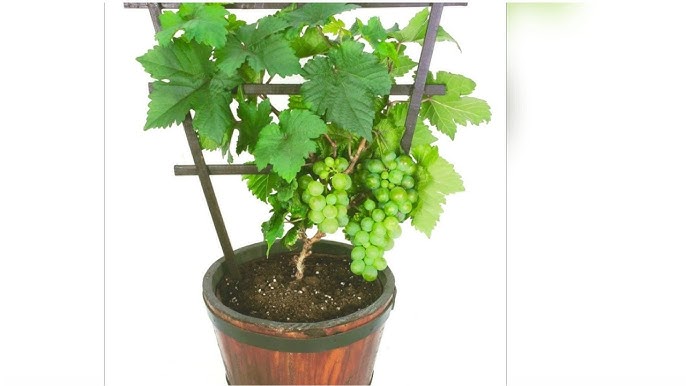
Most people think grapevines need lots of land, deep soil, and plenty of ground space. However, growing them in pots comes with many advantages:
1. Space-Friendly
You don’t need a backyard. A terrace, balcony, patio, or even a sunny window space is enough.
2. Full Control Over Soil
Pots let you choose rich, well-draining soil—ideal for grapes that hate waterlogged roots.
3. Easier Pest Management
Because the plant is isolated, pests are easier to spot and manage.
4. Controlled Growth
Grapevines can grow aggressively in the ground, but pots help you contain their size and spread.
Choosing the Right Pot: The Foundation of Success
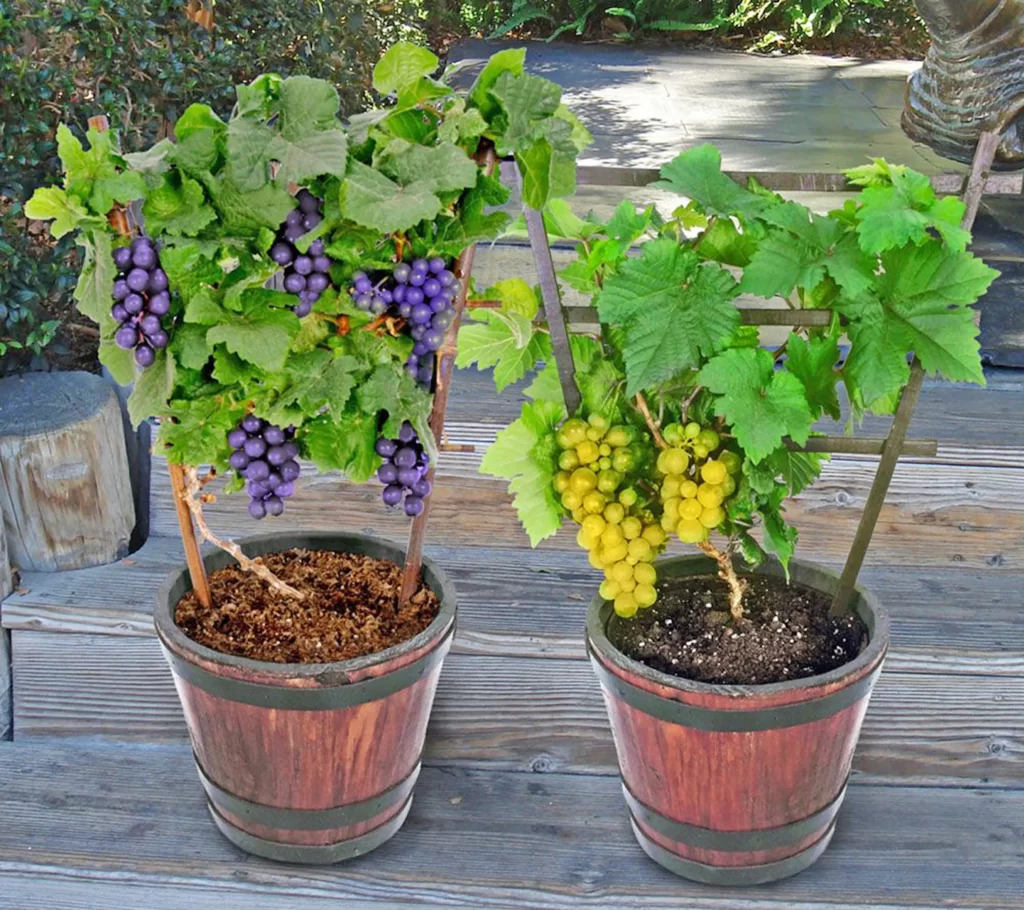
One of the most important decisions I made was selecting the right container. Grapes grow deep roots, so a pot must provide enough depth and stability.
Ideal Pot Requirements
- Size: At least 18–24 inches deep and 20–24 inches wide.
- Material: I prefer terracotta or plastic tubs. Terracotta keeps roots cool, while plastic holds moisture longer.
- Drainage: Ensure 3–5 holes at the bottom. Grapes hate standing water.
Pro Tip:
Place small stones or broken tiles at the bottom to improve drainage and airflow.
Selecting the Best Grape Variety for Pots
Not all grape varieties perform well in containers. I chose a compact, disease-resistant, dwarf-type grapevine, which proved perfect. Here are some ideal options:
- Thompson Seedless (Green)
- Black Monukka
- Concord (Purple)
- Flame Seedless
- Red Globe (needs bigger pots)
Tip:
For beginners, seedless varieties are easier and faster to produce fruit.
Preparing the Perfect Soil Mix
Your grapes’ success largely depends on soil quality. They need loose, fertile, well-draining soil.
My Recommended Soil Mix (100% success rate!)
- 40% garden soil
- 30% compost or cow dung manure
- 20% river sand
- 10% coco peat (optional)
Mix thoroughly until it’s light, fluffy, and nutrient-rich.
Add Basal Fertilizer
Before planting, mix in:
- A handful of bone meal
- A handful of neem cake powder (pest prevention)
- 1–2 tablespoons of rock phosphate
Planting the Grape Sapling
Step-by-Step Process
- Fill the pot with the prepared soil, leaving 3–4 inches at the top.
- Place the grape sapling gently in the center.
- Ensure the root ball is level with the soil surface.
- Firmly press the soil around the roots.
- Water thoroughly until it drains from the bottom.
Initial Care
Keep the pot in partial shade for 7 days to help the plant adjust.
Training and Support: The Vine Needs a Path
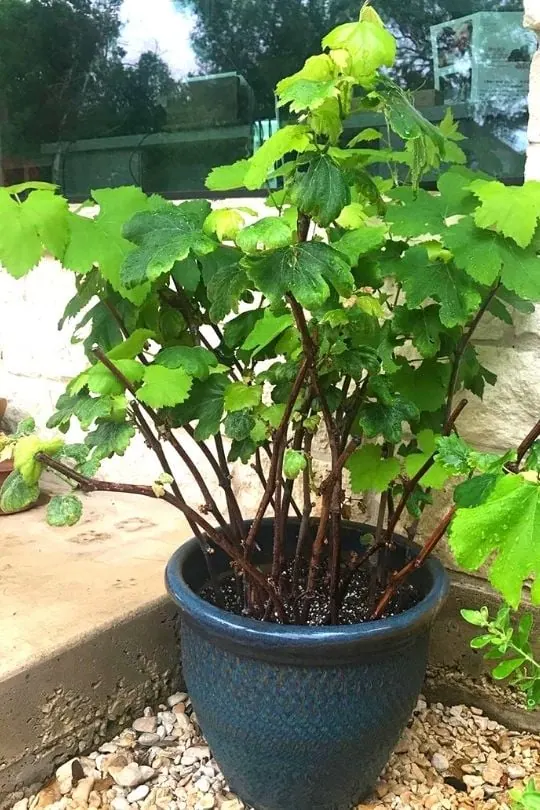
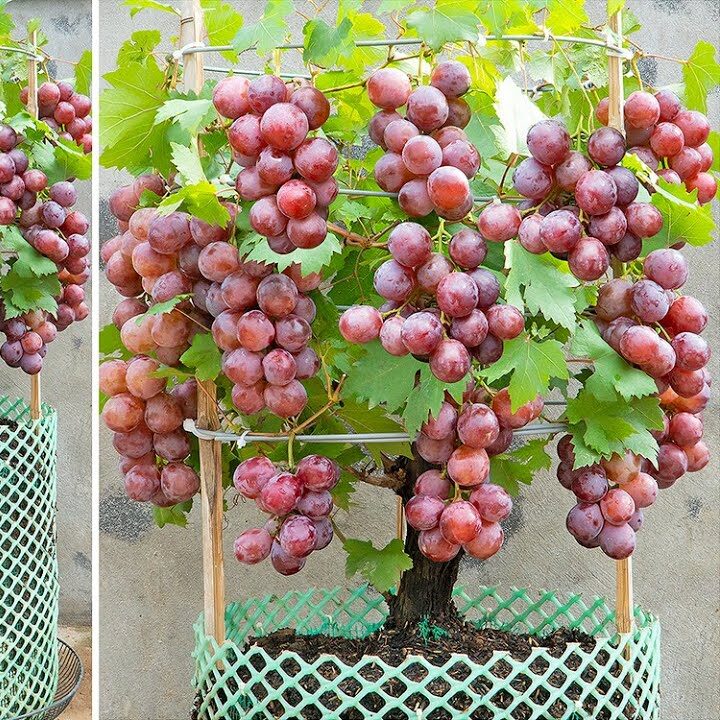
Grapevines love to climb, so giving them a strong support structure is essential.
Support Options
- Wooden or metal trellis
- Wire fencing
- Vertical poles with horizontal wires
- Balcony railings (works wonderfully!)
Training Tips
- Guide the main stem upward using soft ties or cloth strips.
- Encourage branches to grow horizontally to stimulate fruiting.
Remember:
Horizontal branches = More grapes!
Sunlight Requirements
Grapes are sun worshippers.
- 6–8 hours of direct sunlight daily is mandatory.
- If growing on a balcony or terrace, choose the sunniest spot available.
Without enough sunlight, grapes produce fewer fruits and weaker vines.
Watering Schedule
Grapevines are surprisingly drought-tolerant.
Watering Rules
- Water only when the top 2–3 inches of soil feel dry.
- Avoid daily watering — it causes root rot.
- Deep watering once or twice a week is ideal.
Important Note:
In winter, reduce watering significantly.
Fertilizing the Grape Plant
Feeding grapes correctly ensures vigorous growth and abundant fruiting.
Monthly Feeding Schedule
- Every 30 days, add:
- 2 handfuls of compost
- 1 tablespoon bone meal
- Banana peel fertilizer or potash for sweeter fruits
- Mix lightly into the top layer of soil.
During Flowering and Fruiting
- Add more potassium (K)
- Use seaweed extract, vermicompost tea, or organic potash
Avoid nitrogen-heavy fertilizers during fruiting, as they encourage leaves, not fruits.
Pruning: The Secret Behind Big Harvests
Pruning is where many beginners make mistakes. Grapes need heavy pruning for fruit production.
When to Prune
- Late winter or early spring (before new growth starts)
How to Prune
- Remove all weak, thin, or crowded branches.
- Leave 2–3 main branches as the plant’s permanent structure.
- Cut back side shoots, leaving 2–3 buds per shoot.
Pruning energizes the vine and boosts fruit production.
Dealing with Pests and Diseases
Even in pots, grapevines can attract pests.
Common Pests
- Mealybugs
- Aphids
- Caterpillars
- Leafhoppers
Organic Solutions
- Spray neem oil (5 ml per liter) every 15 days
- Use soap water spray for soft-bodied insects
- Keep soil clean and remove fallen leaves
Disease Prevention
- Ensure proper air circulation
- Avoid overwatering
- Keep support structures dry and clean
Flowering and Fruiting Stage: The Most Exciting Phase
Once your grapevine matures, tiny green clusters appear — the first signs of grapes!
Tips for Better Fruiting
- Provide full sunlight
- Add potash-rich fertilizer
- Keep the vine pest-free
- Prune wisely before the season
Patience Pays
Most grapevines take 10–14 months to bear fruit in pots. But once they start, production improves every year.
Harvesting Your Potted Grapes
The color change is usually the biggest sign of ripeness, but don’t rely on color alone.
How to Know Grapes Are Ready
- Taste one grape from the bunch
- If it’s sweet and flavorful, harvest immediately
- Use sharp scissors to cut the whole bunch
Freshly harvested grapes are juicy, fragrant, and far superior to store-bought varieties.
My Experience: The Joy of Growing Grapes in Pots
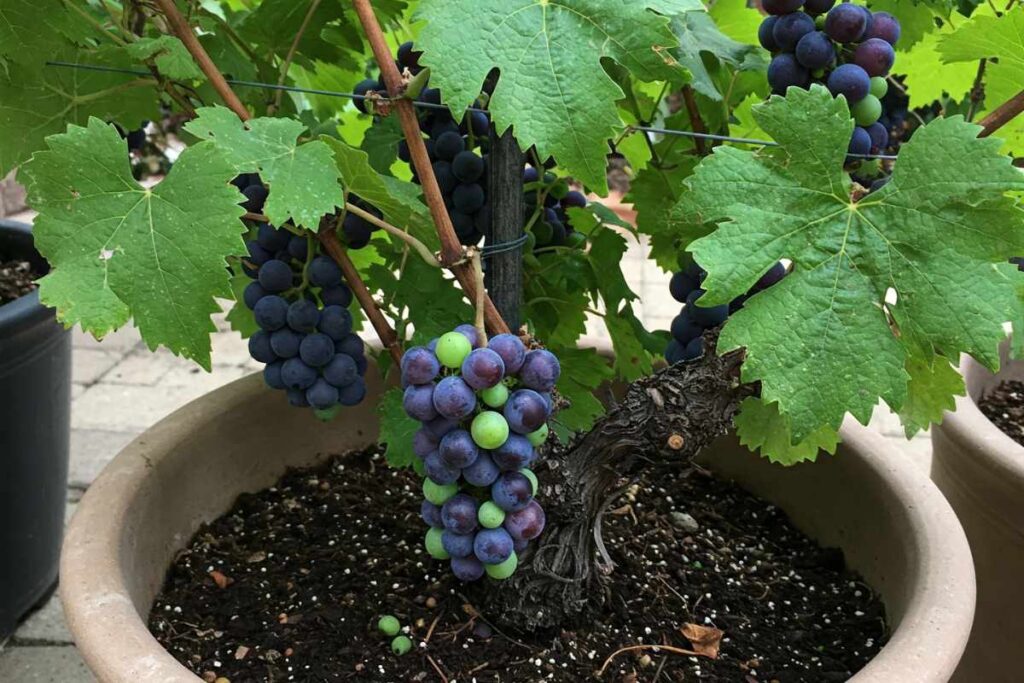
Watching my grapevine transform from a small sapling to a cascading green canopy was incredibly satisfying. The first harvest tasted sweeter than anything I’ve ever bought, simply because it was grown with care and patience.
Seeing those tiny clusters grow larger each week felt like magic — a reminder that even in a small space, nature can flourish beautifully.
Final Thoughts
Growing grapes in pots is not only possible — it’s enjoyable, productive, and incredibly rewarding. With the right soil, sunlight, support, and care, anyone can create their own mini vineyard at home.
If you’re dreaming of homegrown fruits, start with grapes. They’re hardy, beautiful, and delicious — the perfect plant for beginner and expert gardeners alike.