Gardening doesn’t always require traditional pots, raised beds, or large backyard spaces. Sometimes, the most beautiful and eco-friendly container is one the earth gives us naturally—bamboo. Strong, lightweight, and aesthetically striking, bamboo makes an excellent material for growing herbs, flowers, vegetables, and even small fruit plants.
In this 1200-word guide, you’ll learn how to grow plants in bamboo containers, how to prepare the bamboo, which plants thrive best, and the hidden benefits of this natural gardening technique. Whether you’re looking to decorate your balcony, create a rustic-style garden, or embrace sustainable planting, growing in bamboos is a creative solution that blends nature with nature.
Let’s get started!
🎍 Why Bamboo Makes an Amazing Growing Container
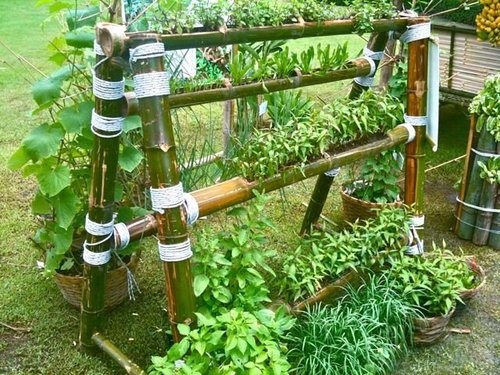
Growing in bamboo isn’t just a trend—it’s a smart gardening technique used in many eco-focused cultures. Here’s why bamboo works beautifully for planting:
✔ Eco-Friendly and Sustainable
Bamboo is one of the fastest-growing plants in the world. Using dried culms as containers reduces plastic waste and supports green gardening.
✔ Naturally Breathable Material
Bamboo’s porous nature allows for excellent aeration, helping roots breathe and preventing soil from becoming compact.
✔ Stylish, Rustic Aesthetic
Bamboo planters add natural beauty to any garden, bringing a tropical, earthy charm to balconies, patios, or indoor spaces.
✔ Versatile in Size and Shape
You can use bamboo as:
- Vertical planters
- Horizontal troughs
- Hanging pots
- Wall-mounted herb gardens
- Decorative mini pots for succulents
✔ Lightweight but Durable
Even large bamboo pieces are easier to move compared to clay or ceramic pots.
With these advantages, bamboo becomes more than a container—it becomes part of the garden’s identity.
🎋 Choosing the Right Bamboo for Planting
Not all bamboo poles are ideal for planting. Here’s how to select quality pieces:
1. Choose Mature Bamboo
Bamboo that’s 2–3 years old is strong and resistant to cracking.
2. Pick Thick-Walled Culms
Thicker walls ensure long-lasting planters.
3. Diameter Should Match Plant Type
- 5–8 cm: Herbs, succulents
- 8–12 cm: Small vegetables
- 12–18 cm: Larger plants like peppers or dwarf fruit
4. Dry Bamboo Properly
Using freshly cut bamboo can lead to cracking. Choose bamboo that has dried for at least 1–3 months.
5. Avoid Bamboo with Signs of Mold
Look for clean, smooth surfaces without fungal spots.
Once you’ve selected the right bamboo, it’s time to prepare it for planting.
🛠️ How to Prepare Bamboo Containers for Growing
Turning bamboo into a planter requires simple steps. Here’s the complete method:
Step 1: Select the Length
Determine the size based on what you want to plant:
- Vertical pot: 20–40 cm
- Horizontal trough: 30–60 cm
- Herb planters: 10–20 cm
Step 2: Cut the Bamboo
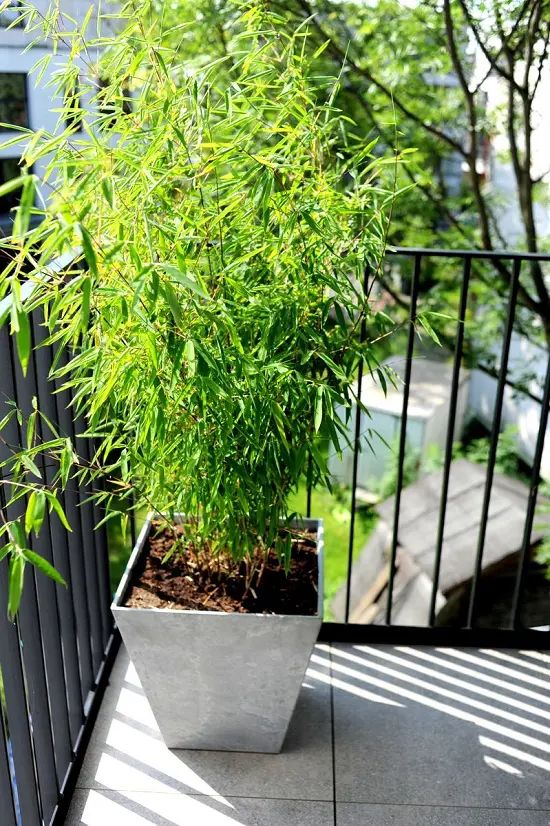
Using a hand saw or power saw, cut the bamboo cleanly. If using vertical pots, keep one of the natural nodes as the bottom of the planter.
For horizontal planters:
- Split the bamboo in half
- Remove the internal partitions
Step 3: Create Drainage Holes
Good drainage is essential. Use:
- A drill
- A heated metal rod
- Sharp nail and hammer
Add 3–6 holes at the bottom depending on size.
Step 4: Treat the Bamboo (Optional but Recommended)
To increase lifespan:
- Soak in borax-boric acid solution
- Apply natural oils (linseed, coconut, castor)
- Seal the ends with natural varnish
This protects bamboo from fungus and moisture damage.
Step 5: Add a Lining (Optional)
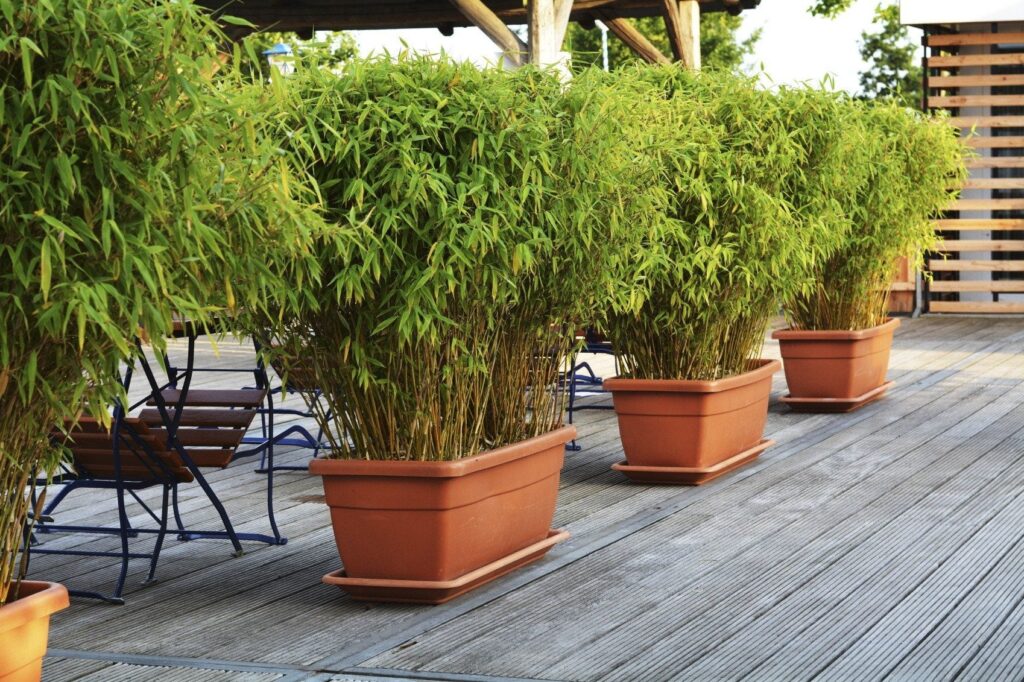
Lining reduces water damage and increases durability.
Use:
- Coconut fiber sheet
- Jute fabric
- A thin biodegradable plastic sheet
Poke holes for drainage.
Step 6: Fill With the Right Soil Mix
For healthy plants, add a balanced soil mixture:
Recommended mix:
- 40% garden soil
- 30% compost or vermicompost
- 20% coco peat
- 10% sand
This ensures aeration, moisture retention, and nutrient balance.
Your bamboo planter is now ready for planting!
🌱 What Plants Grow Best in Bamboo Containers?
While bamboo containers can accommodate a wide variety of plants, some species thrive exceptionally well.
🌿 1. Herbs
Herbs are perfect for bamboo planters because they require shallow roots.
Best options:
- Mint
- Basil
- Thyme
- Oregano
- Chives
- Lemongrass
- Coriander
Herb-filled bamboo pieces hanging in the kitchen look both beautiful and useful.
🥬 2. Leafy Vegetables
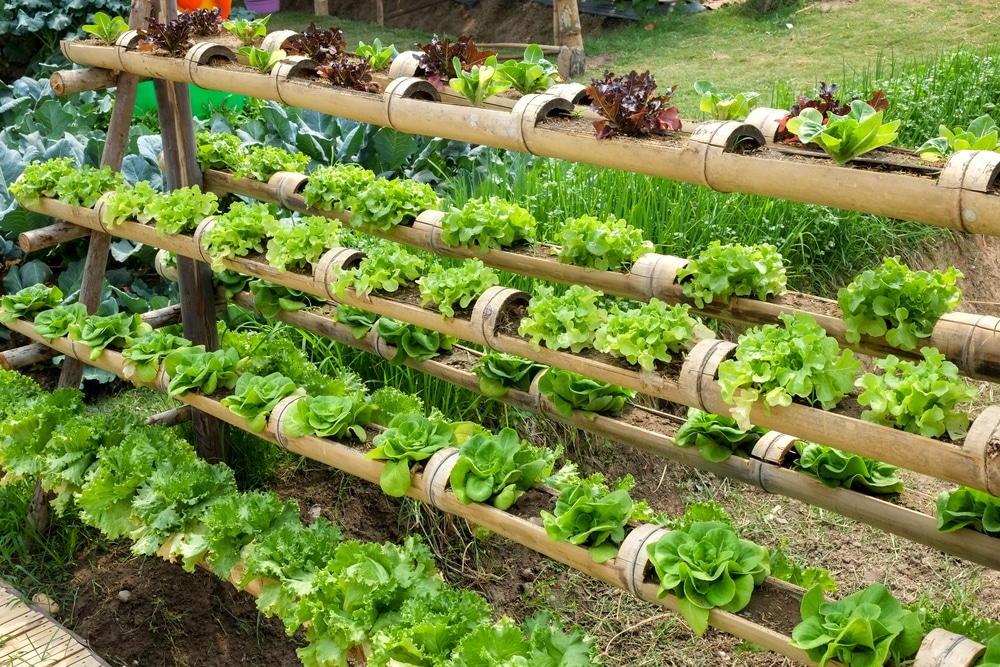
Shallow-rooted greens grow effortlessly in bamboo troughs.
Great choices:
- Spinach
- Lettuce
- Rocket
- Kale (baby)
- Mustard greens
🍅 3. Small Vegetables
Compact veggies with modest roots thrive in medium-sized bamboo pots.
Plant options:
- Cherry tomatoes
- Small pepper varieties
- Baby carrots
- Spring onions
- Radishes
🌸 4. Flowers
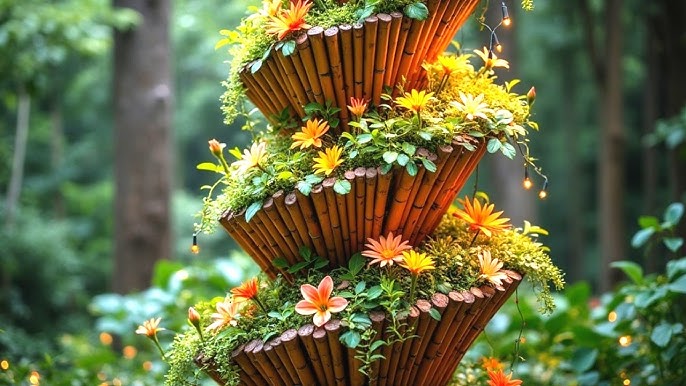
Bamboo creates a stunning natural vase for blooms.
Try growing:
- Marigolds
- Petunias
- Portulaca
- Nasturtiums
- Pansies
- Daisies
🎍 5. Succulents and Cacti
These plants love bamboo’s breathable environment.
Best types:
- Aloe
- Echeveria
- Haworthia
- Jade
- Mini cactus varieties
Bamboo succulent planters make excellent home décor.
💧 Watering Techniques for Bamboo Planters
Bamboo containers dry out faster because they are partially breathable. Here’s how to manage watering wisely:
✔ Water more frequently than ceramic pots
Most plants need watering every 1–2 days depending on weather.
✔ Use slow-release watering methods
- Wick irrigation
- Bottle drip
- Mulching the soil surface
✔ Avoid overwatering
Although bamboo breathes, waterlogging can still harm plant roots.
Check soil moisture before each watering by inserting your finger 2–3 cm deep.
🌞 Sunlight Requirements
Most bamboo planters work best in spaces with:
- 4–6 hours sunlight for herbs and leafy greens
- 6–8 hours for peppers and tomatoes
- Partial shade for decorative flowers
Bamboo does not overheat like plastic, making it suitable for sunny balconies.
🌱 Fertilizing Plants in Bamboo
Bamboo containers pair well with organic fertilizers.
Best natural fertilizers:
- Vermicompost
- Cow dung compost
- Banana peel liquid
- Eggshell powder
- Fish amino acid
Feed plants every 15–20 days to maintain growth.
🐛 Pest & Disease Management
Growing in bamboo reduces many soil diseases thanks to excellent aeration. However, still watch for:
- Aphids
- Mealybugs
- Whiteflies
- Fungal spots
Use:
- Neem oil spray
- Soap water spray
- Cinnamon powder on soil
Healthy bamboo containers naturally discourage mold when kept dry from the outside.
🎨 Creative Ways to Use Bamboo Planters
✔ Hanging Bamboo Herb Garden
Hang horizontal bamboo planters using jute rope for a rustic wall display.
✔ Vertical Standing Bamboo Pots
Create a row of vertical bamboo tubes filled with flowers along pathways.
✔ Balcony Bamboo Rail Planters
Use small bamboo poles tied to railings for compact vegetable gardens.
✔ Tiered Bamboo Garden Shelf
Stack bamboo planters on wooden shelves for a stunning multi-layer look.
✔ Indoor Zen Garden
Use small bamboo pots with succulents and white stones.
🌿 Tips for Long-Lasting Bamboo Planters
To make your bamboo containers last 2–4 years:
✔ Keep them elevated from the ground
✔ Avoid constant standing water
✔ Apply natural oil every few months
✔ Keep bamboo out of direct rain when possible
✔ Add a liner inside
✔ Reapply varnish yearly
With proper care, bamboo remains sturdy and attractive.
🍃 Final Thoughts: Grow Sustainably, Grow Beautifully
Growing plants in bamboo is more than just gardening—it’s a connection to nature’s cycles. You’re using a natural material to nurture natural life. This sustainable approach brings charm, efficiency, and creativity to your gardening space.
Whether you want herbs in your kitchen, flowers on your balcony, or vegetables in unique rustic pots, bamboo offers endless possibilities. Strong, eco-friendly, and visually stunning, bamboo planters prove that gardening can be both beautiful and planet-friendly.