Imagine stepping into your backyard, brushing aside green potato vines, and pulling from the soil plump, golden tubers ready to cook. Turning your backyard into a potato patch isn’t just about growing food — it’s about cultivating nourishment, sustainability, and joy. Potatoes are one of the most versatile and rewarding vegetables you can grow at home, especially for anyone passionate about vegetarian cuisine. From creamy mashed potatoes to hearty veggie stews and crispy baked wedges, homegrown spuds can transform everyday meals into comforting, wholesome delights.
This article serves as a complete guide for anyone eager to grow their own potatoes and enrich their vegetarian menu with fresh, nutritious ingredients right from the garden.
Why Potatoes Deserve a Place in Every Backyard

Potatoes are one of the easiest and most productive vegetables to grow, making them perfect for backyard gardeners — even beginners. They’re rich in potassium, vitamin C, and fiber, and provide a satisfying base for countless vegetarian meals. Beyond their nutrition, potatoes are a “grower’s delight”: they require minimal maintenance, adapt to various climates, and store well after harvest.
For vegetarians, they are a staple ingredient — serving as the backbone for veggie soups, curries, casseroles, and even vegan snacks. A single square meter of garden space can yield up to 4–5 kilograms of potatoes, enough to power several weeks of plant-based meals.
Preparing the Perfect Potato Patch

Transforming your backyard into a potato-growing zone starts with thoughtful soil preparation and smart planning. Here’s how to do it right:
- Choosing the Right Spot
Potatoes thrive in sunny areas with at least 6 hours of sunlight daily. Choose a well-drained section of your garden — soggy soil can lead to rot. If your yard has clay-heavy soil, consider using raised beds or large containers for better control over drainage and soil texture. - Soil Preparation
Potatoes prefer loose, fertile soil rich in organic matter. Before planting, loosen the soil to a depth of about 8–10 inches and mix in compost or well-rotted manure. A slightly acidic pH between 5.5 and 6.5 is ideal. - Selecting Seed Potatoes
Use certified seed potatoes rather than grocery store ones, as these are disease-free and bred for strong yields. Depending on your climate, choose from early, mid-season, or late varieties.- Early varieties: ‘Yukon Gold,’ ‘Red Norland’ – ready in about 10 weeks.
- Mid-season: ‘Kennebec,’ ‘Gold Rush’ – harvested in 12–14 weeks.
- Late-season: ‘Russet Burbank,’ ‘German Butterball’ – ideal for storage.
Planting Techniques for Success

- Cutting and Curing Seed Pieces
If your seed potatoes are large, cut them into chunks about the size of a golf ball, each with 1–2 “eyes.” Let them cure for a couple of days in a dry place to prevent rot once planted. - Planting Depth and Spacing
Dig trenches about 4 inches deep and 2 feet apart. Place the seed potatoes 12 inches apart in the trench, eyes facing up. Cover with 3–4 inches of soil initially. - Hilling for Healthy Growth
As potato plants grow to about 6–8 inches tall, mound more soil around the base, covering the lower stems. This “hilling” process protects developing tubers from sunlight (which turns them green and toxic) and encourages higher yields. Repeat this every few weeks. - Watering and Feeding
Potatoes love consistent moisture but dislike waterlogging. Water them deeply once or twice a week, depending on rainfall. During the growing period, use an organic fertilizer or compost tea every 3–4 weeks to encourage healthy growth.
Caring for Your Potato Patch
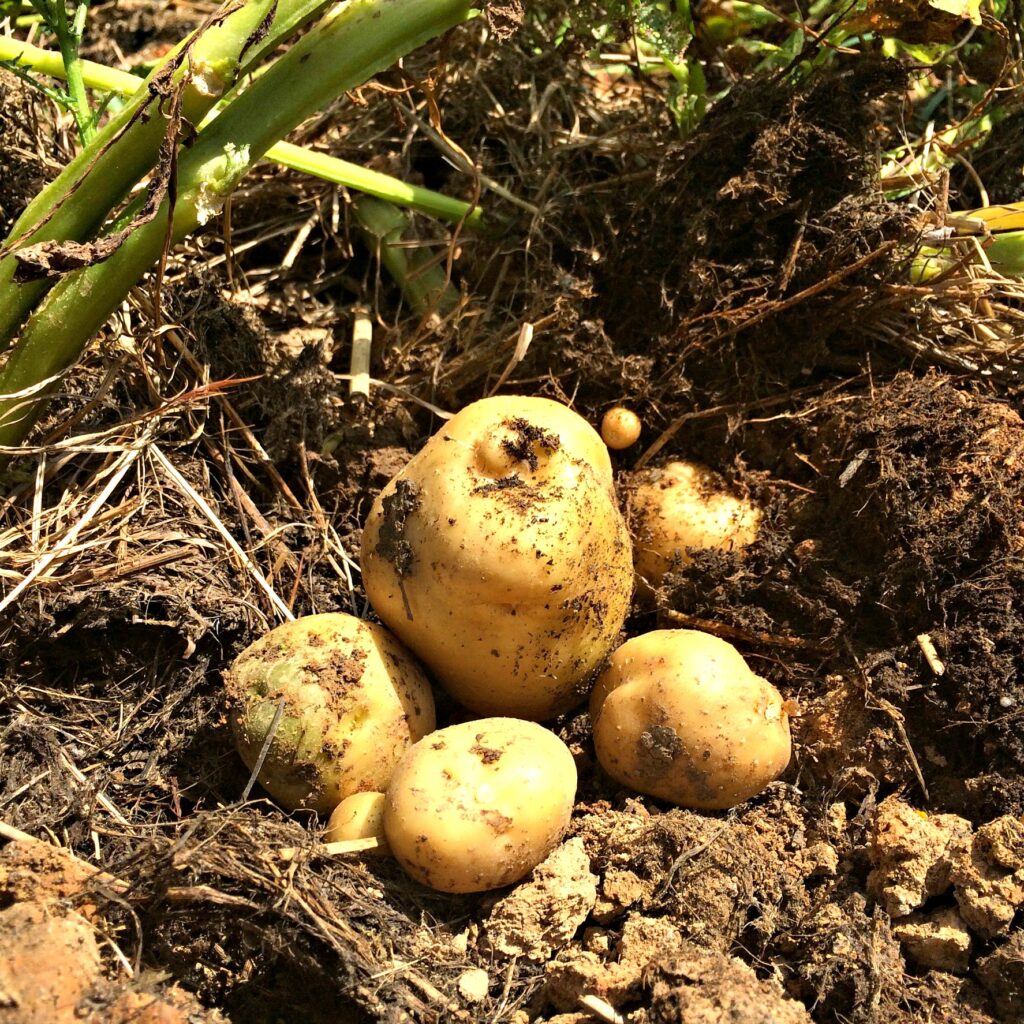
- Weeding: Keep weeds under control to prevent competition for nutrients. Mulching with straw helps suppress weeds and retain soil moisture.
- Pest Control: Watch for common pests like aphids, flea beetles, and the Colorado potato beetle. Use natural deterrents such as neem oil or companion planting (try growing marigolds nearby).
- Disease Management: To avoid fungal problems like blight, avoid overhead watering and rotate your crops yearly.
Harvesting Your Homegrown Treasure
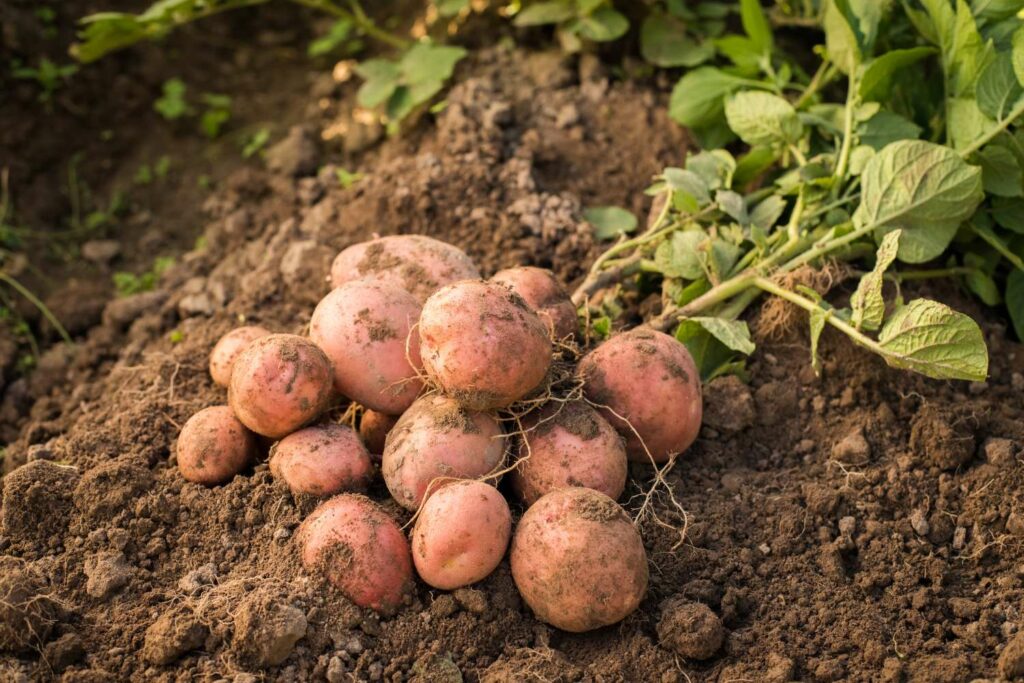
Potatoes are ready to harvest once the plants begin to yellow and die back. Early varieties can be “new potatoes” — small, tender, and perfect for boiling — at about 10 weeks. For full-sized potatoes, wait until the foliage completely withers, then gently dig them out with a garden fork.
Handle them carefully to avoid bruising, and let them dry in a shaded, airy space for a few hours before storage. Store your cured potatoes in a cool, dark, and dry place — ideally at 7–10°C. Properly stored, they can last for months, giving you access to homegrown goodness long after the harvest season.
Culinary Inspiration: Turning Potatoes Into Veggie Delights
Once your potatoes are ready, the fun truly begins in the kitchen. They can be turned into a multitude of vegetarian dishes that balance nutrition and comfort:
- Creamy Potato and Spinach Curry: A fragrant Indian-inspired curry with coconut milk, turmeric, and tender greens.
- Garden Veggie Shepherd’s Pie: Layers of mashed potatoes over lentils, carrots, and peas — the perfect hearty dinner.
- Crispy Baked Potato Wedges: Oven-baked with olive oil and herbs for a healthy alternative to fries.
- Roasted Potato Salad: A fresh mix of roasted spuds, bell peppers, and vinaigrette dressing — ideal for light lunches.
- Stuffed Potato Skins: Filled with sautéed vegetables, cheese, or tofu — a wholesome snack for veggie lovers.
Each dish highlights the versatility of potatoes and demonstrates how growing them at home connects your diet directly to the earth.
Environmental and Health Benefits
Growing your own potatoes isn’t just satisfying — it’s sustainable. By cultivating food in your backyard, you reduce your carbon footprint, eliminate packaging waste, and cut reliance on industrial agriculture. The nutritional benefits are significant too — freshly harvested potatoes retain more vitamins and minerals than store-bought ones that have spent weeks in transit and storage.
Moreover, home gardening promotes mindful eating. When you grow your own produce, you naturally gravitate toward cooking balanced, plant-based meals and minimizing food waste — a step toward both personal wellness and environmental harmony.
Conclusion: From Patch to Plate
Transforming your backyard into a potato patch opens a world of possibilities for vegetarian cooking and self-sufficiency. With a bit of soil, sunshine, and care, you can cultivate a versatile crop that fuels creativity in the kitchen and nurtures a healthier lifestyle.

Every harvest brings with it a reminder — good food doesn’t have to come from far away. It can start right beneath your feet, grow under your hands, and end up on your plate as a wholesome, homegrown delight.
So, grab a trowel, plant those seed potatoes, and let your backyard become the birthplace of comforting, nourishing, and delicious vegetarian meals.