The Green Bay Packers are off to a promising start in the 2025 NFL season, sitting at 4-1-1 after surviving a scare in their narrow 27-23 win over the Arizona Cardinals. Yet, while the team’s record looks solid on paper, not all aspects of their performance inspire confidence—especially on the defensive side of the ball. Among the most pressing concerns is the underwhelming play of cornerback Nate Hobbs, whose struggles have raised serious questions about his fit and future role within Green Bay’s secondary.
What was once considered a bold experiment by the Packers’ coaching staff—moving Hobbs from his natural slot position to the outside—has quickly become a growing liability. With every game, it’s becoming harder to ignore the signs that this experiment simply isn’t working.
A Costly Weak Spot in the Defense
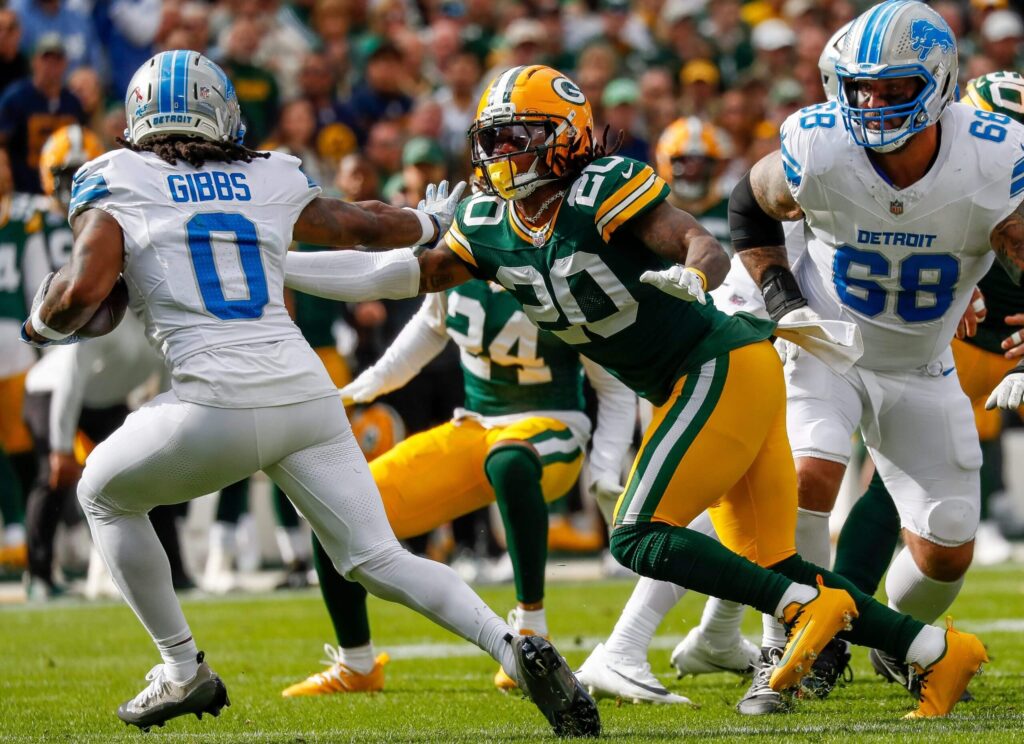
Hobbs’ play against the Cardinals encapsulated his season-long struggles. The 26-year-old allowed four receptions on five targets for 86 yards, including a critical fourth-quarter penalty that extended an Arizona drive and led to a go-ahead field goal. It was a moment that nearly cost Green Bay the game—and one that underscored his continuing issues in coverage.
Through six weeks, Hobbs has given up big plays with alarming regularity. He’s been targeted frequently and beaten often, allowing multiple touchdowns while recording no interceptions and only one pass breakup. His coverage technique has appeared tentative and reactive rather than assertive. For a player once touted as a physical, aggressive corner, Hobbs has looked unusually passive, often caught covering space instead of sticking to receivers.

This regression is especially glaring given his physical reputation. During training camp, Hobbs was praised—sometimes criticized—for his overly physical play, drawing comparisons to old-school, press-heavy defenders. Yet in the regular season, that edge seems to have disappeared. Against the Cardinals, his missed tackle on tight end Trey McBride’s touchdown epitomized his issues—poor positioning, lack of leverage, and failure to finish plays.
A Misfit on the Outside
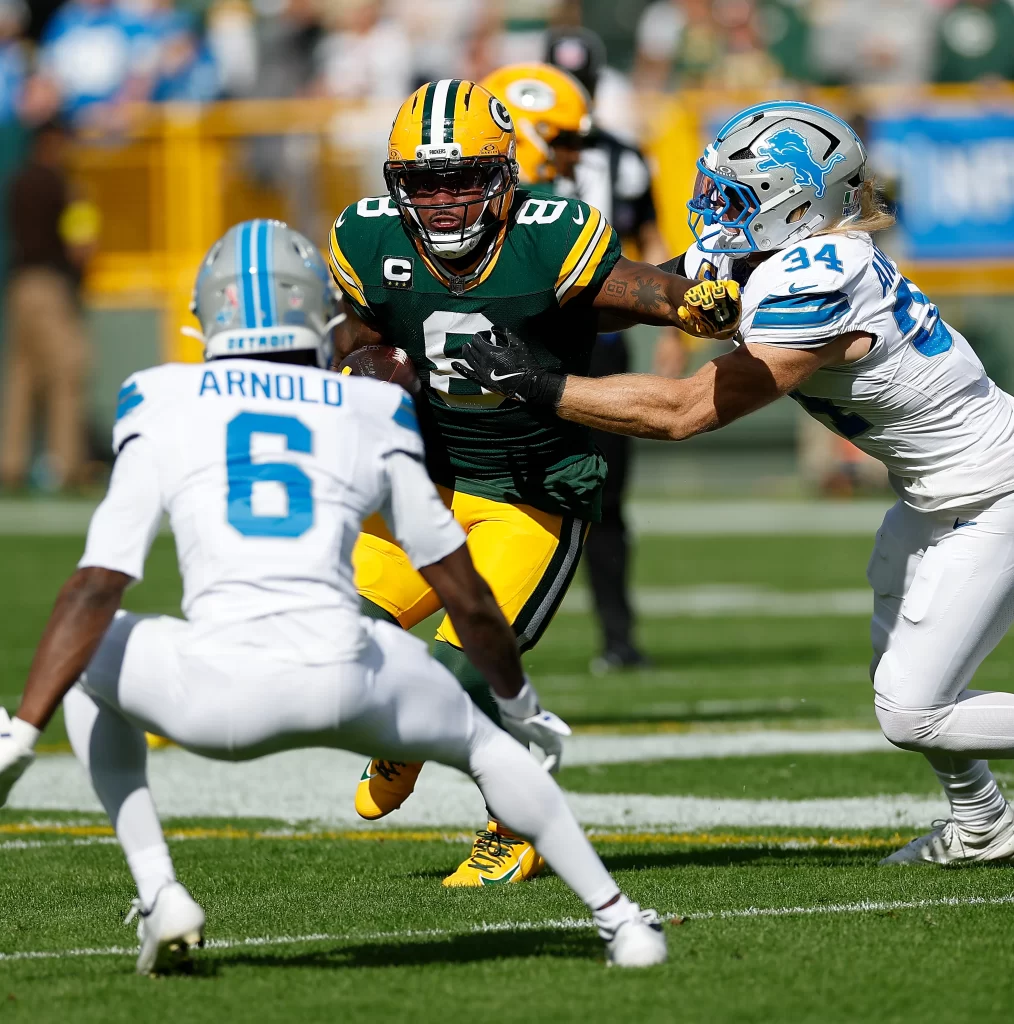
The Packers’ decision to deploy Hobbs primarily as an outside corner has drawn heavy scrutiny. Throughout his NFL career, Hobbs has thrived in the slot, where his quickness and tackling ability allow him to disrupt short routes and support against the run. But moving him outside has exposed weaknesses in his deep coverage and ball-tracking skills.
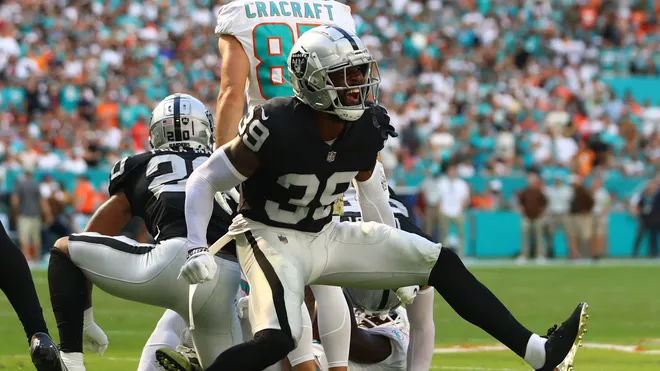
In Las Vegas, where Hobbs spent his first four seasons, his best work came inside, where he handled crossing routes and underneath throws effectively. However, when the Raiders experimented with him outside, his performance declined—a red flag the Packers seemingly overlooked.
The difference in responsibilities between the two roles is significant. Playing outside demands precise footwork, fluid hips, and an instinctive ability to read vertical routes. The slot, by contrast, is about quick reaction time, physicality, and run defense. By forcing Hobbs into a role that doesn’t play to his strengths, the Packers have essentially handicapped his natural skill set.

Blocking Development of Younger Talent
What makes the situation even more frustrating for Packers fans is that Hobbs’ continued struggles are preventing promising young talent from seeing the field. Third-year cornerback Carrington Valentine has been waiting in the wings, yet he logged only two defensive snaps against Arizona.
Valentine, a sixth-round pick in 2023, has already shown he can play at a high level. In 2024, he allowed a passer rating of just 82.8 when targeted and didn’t surrender a single touchdown. His development trajectory fits perfectly with Green Bay’s long-standing “draft and develop” philosophy—a cornerstone of their organizational identity.
However, the team’s insistence on justifying Hobbs’ four-year, $48 million contract seems to be coming at the expense of Valentine’s growth. Financial investment should never outweigh on-field performance, but in this case, it appears to be influencing the team’s decisions.
There’s also the complicating factor of second-year safety Javon Bullard. Drafted in the second round, Bullard has struggled to adjust to the slot role this season. His inconsistency has seemingly prevented the coaching staff from moving Hobbs back inside, leaving the secondary in a state of disarray.

Injuries and Inconsistency
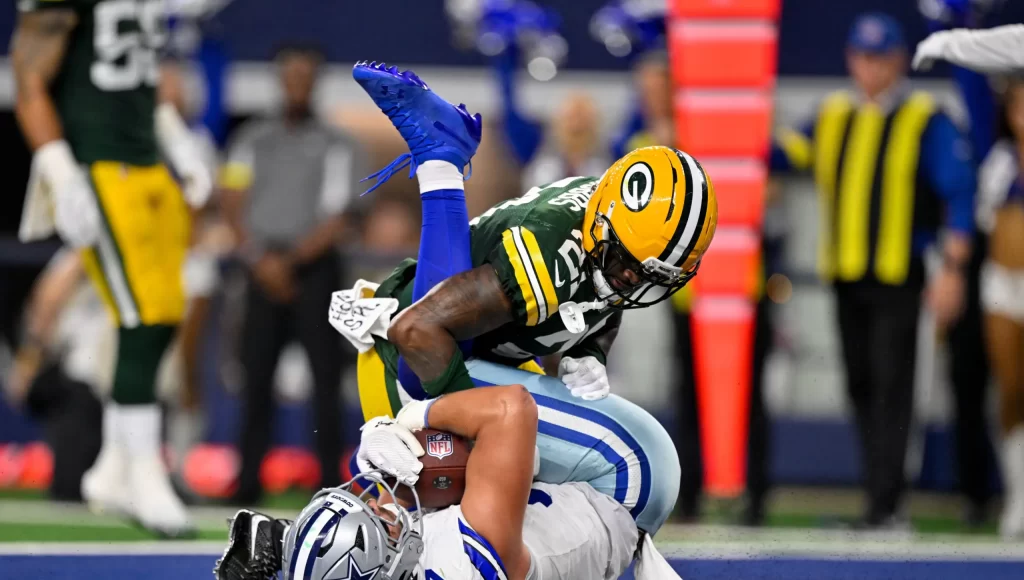
In fairness to Hobbs, injuries have been part of his story this season. After undergoing a knee scope earlier in the year, he missed the start of the season and has since appeared on the injury report multiple times with recurring knee issues. It’s entirely possible that lingering discomfort is affecting his mobility and confidence.
Still, the Packers can’t afford to let one player’s recovery hinder the development of their defensive unit as a whole. If Hobbs isn’t fully healthy, the coaching staff must protect him—and the team—by reducing his snap count or temporarily benching him. Continuing to trot him out at less than 100% only increases the risk of further injury and continued poor performance.
Strategic Adjustments: What Can Green Bay Do?
The Packers have several possible courses of action to address the Hobbs situation before it becomes an even bigger liability:
- Move Hobbs Back to the Slot:
This is the most logical short-term fix. It allows Hobbs to return to the position where he’s most comfortable, leveraging his physicality in tighter spaces rather than exposing him to deep routes on the boundary. In turn, Valentine can take over on the outside, giving the defense a better balance of experience and athleticism. - Rotate Personnel More Aggressively:
If the Packers aren’t ready to bench Hobbs outright, they can at least limit his exposure by rotating him with Valentine or other young defensive backs. This approach maintains flexibility while sending a clear message that performance dictates playing time. - Simplify the Defensive Schemes:
Defensive coordinator Joe Barry could adjust the coverage calls to better support Hobbs’ limitations. More zone coverage and safety help could mask his deficiencies while still allowing the defense to stay aggressive up front. - Consider a Bench Role:
If all else fails, a benching might be necessary. While it’s not ideal for a high-priced free agent, accountability is crucial in maintaining locker-room trust. Benching Hobbs could serve as both a wake-up call and an opportunity for Valentine to earn his stripes.
The Cost of Stubbornness
Green Bay’s secondary has long been a pillar of its defensive identity, built on athleticism, discipline, and adaptability. But by refusing to adapt to Hobbs’ struggles, the Packers risk undermining that very foundation. The defense has already shown signs of strain in coverage, allowing opponents to attack specific matchups with ease.

Opposing quarterbacks have clearly identified Hobbs as a weak link, targeting him repeatedly in critical moments. Until the Packers address the issue, that trend is likely to continue—and it could cost them games down the stretch.
This isn’t the first time the Packers have faced such a dilemma. History shows that the team often tries to justify big contracts by doubling down on struggling players rather than pivoting quickly. But in a season where the NFC playoff picture looks crowded, Green Bay can’t afford sentimentality or stubbornness.
A Crossroads for the Coaching Staff
The coming weeks will be a defining stretch for the Packers’ coaching staff. Do they prioritize production and accountability, or continue protecting their financial investments? Head coach Matt LaFleur and defensive coordinator Joe Barry must make that call soon—because every snap Hobbs takes at his current level of play risks undoing the progress this defense has made elsewhere.
For Nate Hobbs, this could also be a career turning point. If he can rediscover his physical, confident style of play in the right role, there’s still time to rewrite the narrative. But if his struggles persist, Green Bay may have no choice but to turn the page.

Conclusion
The Packers may be winning games, but cracks in their defense are becoming harder to ignore. Nate Hobbs’ play has reached an unacceptable level, and the team’s insistence on forcing him into an ill-fitting role only magnifies the issue. The solution isn’t complicated—it’s about putting players in positions to succeed, not forcing schemes or salaries to justify themselves.
If Green Bay wants to sustain its early-season success, decisive action is needed. Whether that means moving Hobbs to the slot, giving Valentine a real chance, or rethinking their defensive rotations entirely, one thing is clear: standing still is no longer an option.