Green onions—also known as spring onions or scallions—are among the easiest and most rewarding vegetables to regrow at home. Even during the coldest months, when outdoor gardening becomes difficult or impossible, green onions continue to thrive indoors with minimal effort.
If you’ve ever chopped off the leafy tops for cooking and wondered what to do with the leftover white bulbs, winter is the perfect time to put them to use. Regrowing green onions indoors is one of the simplest winter gardening hacks. It requires no soil, no complicated setup, and no experience. Plus, you get a continuous supply of fresh, crisp, flavorful greens even when the weather outside is freezing.
In this detailed guide, you’ll learn how to regrow green onions during cold months, the best techniques to keep them alive, and how to harvest them again and again all winter long.
Why Green Onions Are Perfect for Winter Regrowth
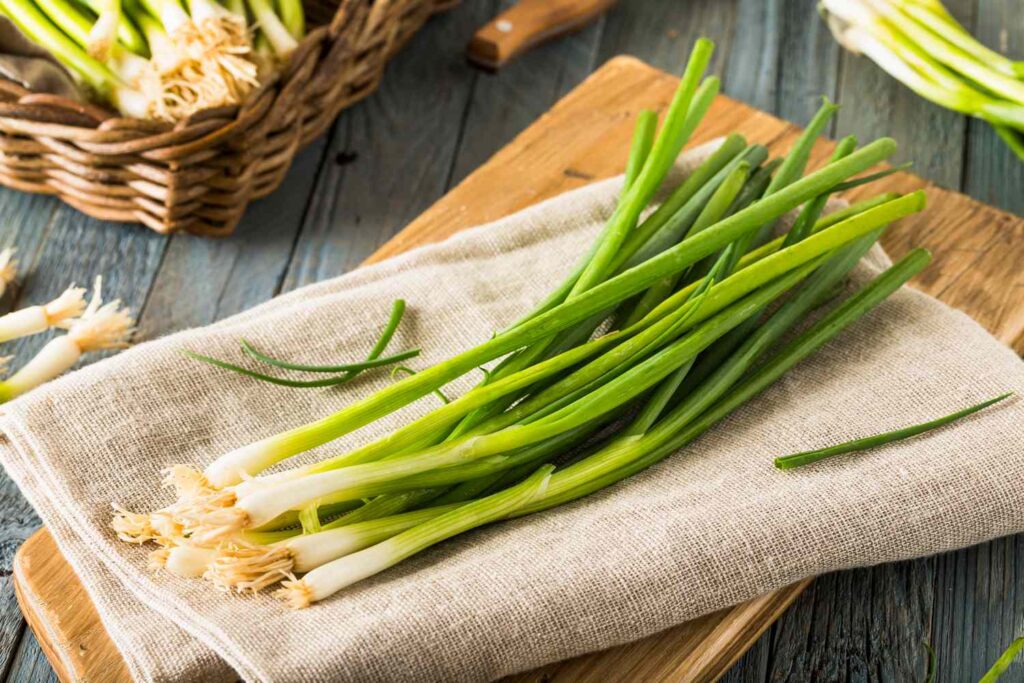
Green onions are naturally resilient plants. Their compact root system and strong lifecycle make them ideal candidates for winter regrowth indoors. Here’s why they’re perfect for cold-season gardening:
1. They grow rapidly
Even in low temperatures and low-light environments, green onions sprout new growth within days.
2. They require very little sunlight
While many vegetables need long hours of sun, green onions grow easily on windowsills, kitchen counters, or under mild grow lights.
3. They thrive in water
You don’t even need soil! The leftover root bulbs regenerate quickly in a simple glass of water.
4. They are space-saving
Even if you live in a small apartment, just a few bulbs can grow in jars, cups, or small planters.
5. They offer continuous harvests
Each cut leads to fresh regrowth—making them incredibly economical and sustainable.

This makes green onions one of the best indoor crops during winter.
Method 1: Regrow Green Onions in Water (The Easiest Winter Method)
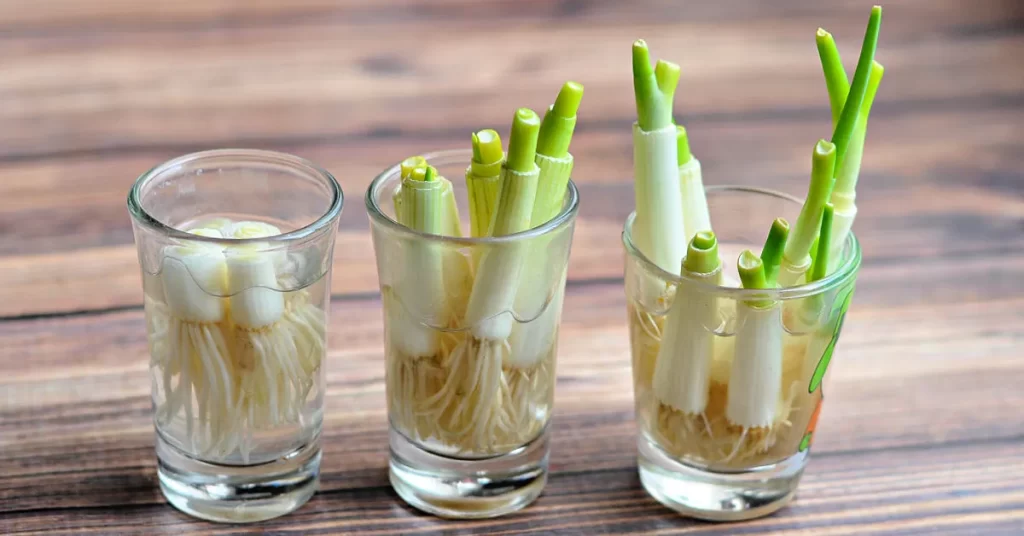
This is the simplest, quickest, and most popular method—ideal for beginners or anyone wanting fresh greens with zero mess.
What You Need
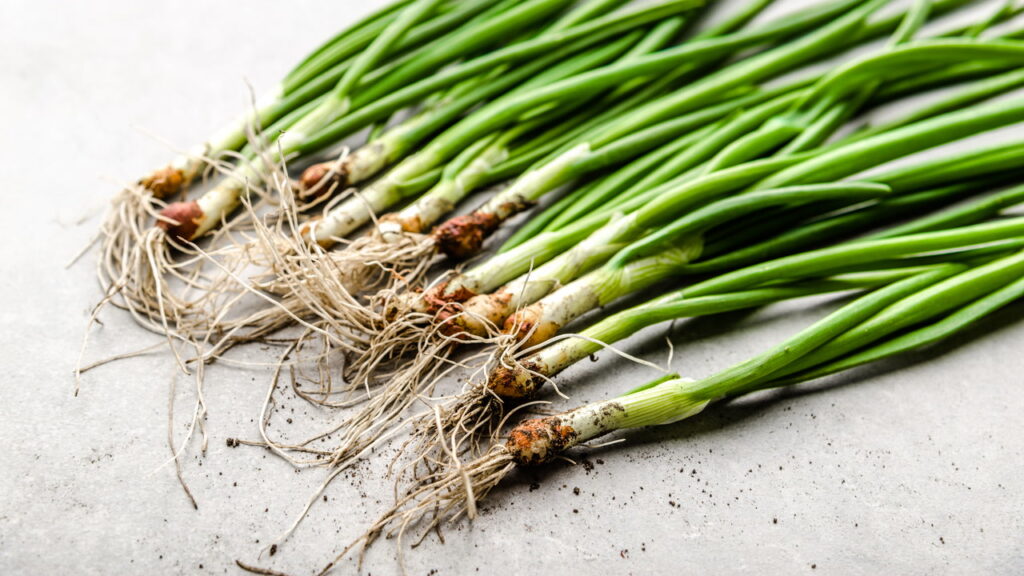
- Leftover green onion bulbs (2–3 inches of the white part with roots)
- A glass or jar
- Clean water
- A sunny windowsill (east-facing or south-facing works best)
Step-by-Step Guide
1. Prepare the bulbs
After using the tops, leave the bottom roots intact. Trim any wilted or dried parts from the tops.
2. Fill the jar with water
Add just enough water to cover the roots.
Important: The white bulb should stay above water to prevent rotting.
3. Place bulbs in the jar
Keep them upright, close together, but not overcrowded.
4. Put the jar in a bright location
Sunlight is minimal during winter, so choose your brightest spot.
5. Change the water every 2 days
Fresh water prevents bacterial growth and keeps the roots oxygenated.
6. Watch the magic happen
Within 48–72 hours, you’ll notice new green shoots.
In 5–7 days, your onions will be ready to harvest again.
Winter Tip
During very cold months, window sills can get chilly. Move the jar slightly inward at night to protect the roots from cold drafts.
Method 2: Regrow Green Onions in Soil (Best for Long-Term Winter Harvests)
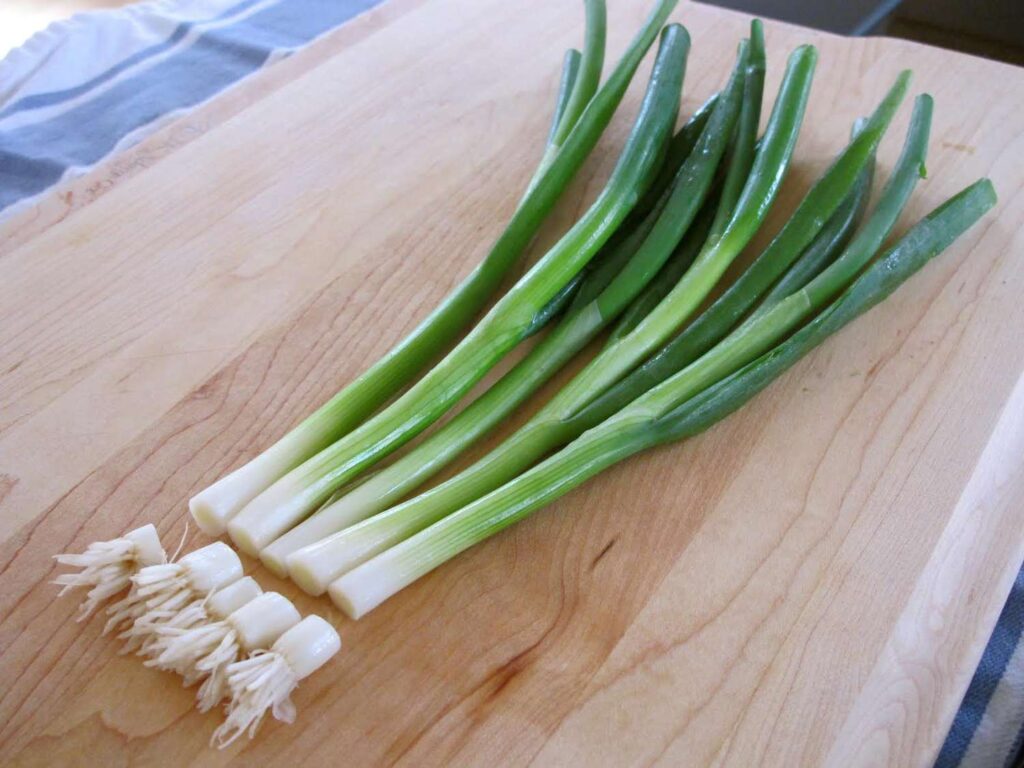
While water-growing is fast and simple, growing in soil yields stronger, longer-lasting plants.
What You Need
- Green onion bulbs with roots
- A small pot (4–6 inches deep)
- Well-draining potting mix
- Indoor light source or bright window
Step-by-Step Guide
1. Fill the pot with soil
Use a well-draining potting mix—avoid heavy garden soil that retains too much moisture in winter.
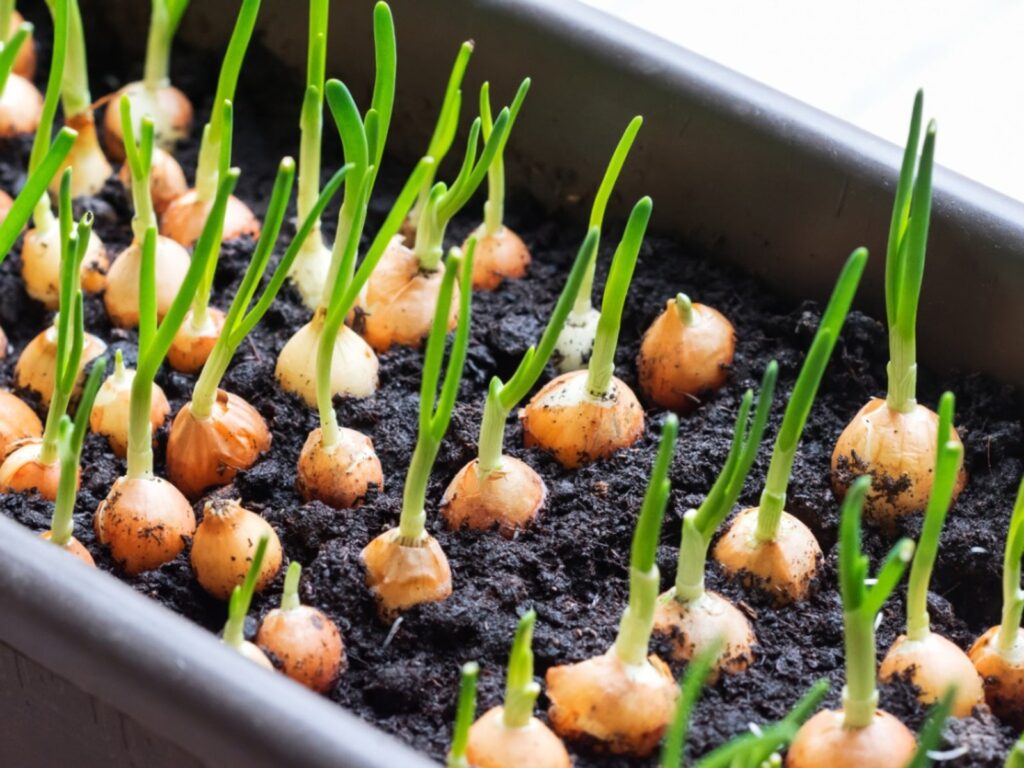
2. Plant the bulbs upright
Insert the bulbs 1–2 inches deep, with the tops sticking out slightly.
3. Water lightly
Moisten the soil but avoid overwatering since winter evaporation is slow.
4. Provide bright, indirect sunlight
If using a grow light, keep it about 6–10 inches above the plant for 8 hours daily.
5. Harvest repeatedly
Cut only the top green parts and let the bulbs continue growing.
Winter Tip
Place pebbles or a tray under the pot to prevent cold surface shock from tile or marble floors.
Maintaining Green Onions Indoors During Winter
Growing them is easy, but winter conditions require slight adjustments to keep your plants healthy.
1. Light Requirements in Cold Weather
Green onions don’t need intense light, but winter daylight is short, so aim to give them:

- 4–6 hours of sunlight
or - 8–10 hours under a small LED grow light
If leaves become pale or thin, it’s a sign they need more light.
Winter Light Tip
Rotate jars or pots every 2–3 days so the shoots grow upright instead of bending toward the light.
2. Watering Needs During Cold Months
In winter, plants absorb water slowly, especially when grown in soil.
Water-grown onions
- Change water every 48 hours.
- Rinse roots if they appear slimy.
Soil-grown onions
- Water lightly when the topsoil feels dry.
- Avoid soggy soil—it causes bulb rot.
3. Temperature Requirements
Green onions prefer temperatures between 15°C to 24°C (60°F to 75°F).
Avoid
- Placing near cold windows during freezing nights
- Keeping pots next to heaters or radiators
- Exposing plants to sudden temperature drops
Maintaining stable temperatures promotes faster regrowth.
4. Humidity Levels
Winter air is usually dry, but green onions tolerate low humidity well.
Still, they benefit from slight moisture around them.
Ways to Improve Humidity
- Place a shallow water tray near the plant
- Group plants together on a tray
- Mist the air lightly (not the bulbs)
5. Using Fertilizer in Winter
Green onions are low feeders, but if grown in soil for many weeks:
- Use a half-strength liquid fertilizer once a month
- Avoid heavy feeding during winter dormancy
- Do not fertilize plants growing only in water
Common Winter Problems and How to Fix Them
Even though they’re easy to grow, green onions can face a few issues during cold months.
1. Yellow or pale leaves
Cause: Low light
Fix: Move to a brighter spot or add a grow light.

2. Bulb rot
Cause: Overwatering or deep water levels
Fix: Keep roots wet, bulbs dry.
3. Slow growth
Cause: Low temperatures
Fix: Move plant slightly away from the window at night.
4. Slimy roots
Cause: Water not changed often
Fix: Rinse roots and clean jar thoroughly.
5. Weak, thin shoots
Cause: Lack of nutrients (in soil-grown onions)
Fix: Add light feeding once a month.
How to Harvest Green Onions in Winter for Maximum Regrowth
Harvesting correctly ensures continuous supply.
Steps
- Wait until shoots are at least 5–6 inches tall.
- Use clean scissors.
- Cut only the upper green part.
- Leave at least 1 inch above the bulb for regrowth.
Regrowth Speed
- First regrowth: 5–7 days
- Later regrowths: 7–10 days
- Most bulbs can regrow 4–6 cycles during winter
Creative Ways to Use Regrown Green Onions During Winter
Green onions add freshness and nutrition to winter meals. You can use them in:
- Soups
- Curries
- Stews
- Fried rice
- Omelets
- Noodles
- Salads
- Stir-fries
- Sandwiches
Their crisp flavor brightens dishes during cold months when fresh herbs are limited.
Why Regrow Green Onions in Winter? The Benefits
Regrowing green onions isn’t just fun—it’s practical and economical.
1. Saves Money
A single bundle can yield weeks of regrowth.

2. Zero Waste Gardening
You reuse kitchen scraps that usually get thrown out.
3. Perfect for Beginners
No tools, soil, or special skills required.
4. Instant Results
Visible growth in 2–3 days keeps you motivated.
5. Fresh Food in Cold Months
You get a consistent source of fresh greens even when markets are limited.
Final Thoughts
Regrowing green onions during cold months is one of the easiest ways to keep gardening alive indoors. Whether you choose the simple water method or prefer the long-lasting soil method, you’ll enjoy continuous, fresh, home-grown greens all winter long.
With just a little light, warmth, and care, your kitchen counter can become a mini winter garden that keeps supplying flavor-packed green onions for weeks.
If you want a low-maintenance indoor crop that grows quickly even in the cold season, green onions are the perfect choice.