Growing tomatoes is one of the most satisfying joys of home gardening, but what if you could grow them in a way that saves space, reduces pests, improves airflow, boosts harvest—and looks absolutely stunning? Welcome to the world of hanging tomatoes, a modern, efficient, and highly productive gardening method that transforms the way you grow tomatoes at home.
This innovative technique is perfect for balconies, terraces, small gardens, and urban homes. Whether you’re a beginner or an experienced gardener, this guide will show you exactly how to grow thriving hanging tomato plants the NEW way.
Let’s explore the secrets of sky-farming!
🌿 Why Grow Tomatoes in Hanging Style?
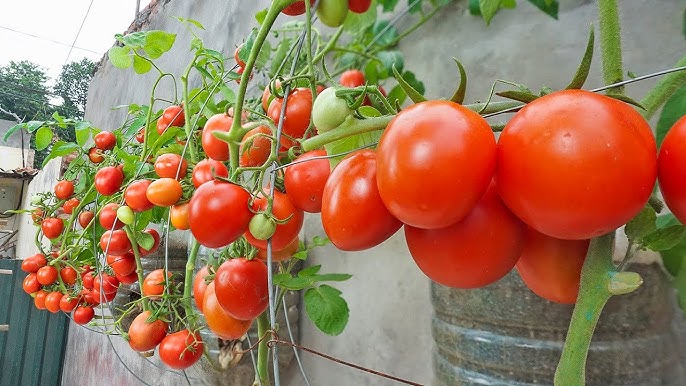
Traditional tomato growing uses pots or garden beds. But hanging tomatoes? They solve several common problems growers face:
✔ Saves Space
Perfect for small apartments and balconies.
✔ Better Airflow
Reduces fungal diseases and improves plant health.
✔ Fewer Pests
Ants, caterpillars, and soil insects have less access.
✔ Easier Harvesting
Tomatoes dangle conveniently at eye level.
✔ Stronger Plant Growth
Gravity helps branches grow outwards instead of crawling on the ground.
✔ Decorative
A hanging tomato basket filled with red fruits looks gorgeous!
This method is especially effective for cherry tomatoes, grape tomatoes, and other small-fruiting varieties.
🍅 1. Choosing the Right Tomato Variety
Not all tomato plants are suitable for hanging growth. You must choose compact or trailing varieties.
Best Varieties for Hanging Tomatoes:
- Cherry tomatoes
- Grape tomatoes
- Roma tomatoes
- Tumbling Tom (ideal trailing variety)
- Tiny Tim
- Balconi Red
- Sweet’n Gold
- Yellow Pear
- Micro-dwarf tomatoes
These plants produce many small fruits, grow quickly, and adapt beautifully to vertical hanging.
Avoid large beefsteak tomatoes—they become too heavy and break stems.
🏺 2. The Perfect Container for Hanging Tomatoes

The container is the foundation of your hanging tomato garden. Choose one that provides enough root space and drainage.
✔ Basket Size:
- Minimum depth: 12–14 inches
- Width: 10–12 inches
- Preferably plastic or coconut fiber-lined baskets
- Strong metal or nylon chains
✔ Drainage
Tomatoes hate waterlogged soil, so ensure:
- At least 4–6 large drainage holes
- Add small stones or gravel at the bottom
Pro Tip:
Use a self-watering hanging container to reduce daily maintenance in summer.
🌱 3. Soil Mix: The Secret to Healthy Hanging Tomatoes
Tomatoes require nutrient-rich, well-draining soil.
Best Soil Mix Recipe:
- 40% garden soil
- 30% compost or vermicompost
- 20% cocopeat
- 10% sand
- 1 tablespoon bone meal (optional)
- Handful of neem cake powder (to prevent soil pests)
This mix provides ideal moisture retention and aeration for root development.
🌞 4. Sunlight: The Most Important Factor
Tomatoes need full sun to produce abundant fruit.
✔ Sunlight Requirement:
- Minimum 6 hours of direct sunlight
- Ideal: 7–8 hours
- Morning sunlight is best
If you grow indoors, use strong LED grow lights for 10–12 hours daily.

🌱 5. Planting the Seedlings (The NEW Method)

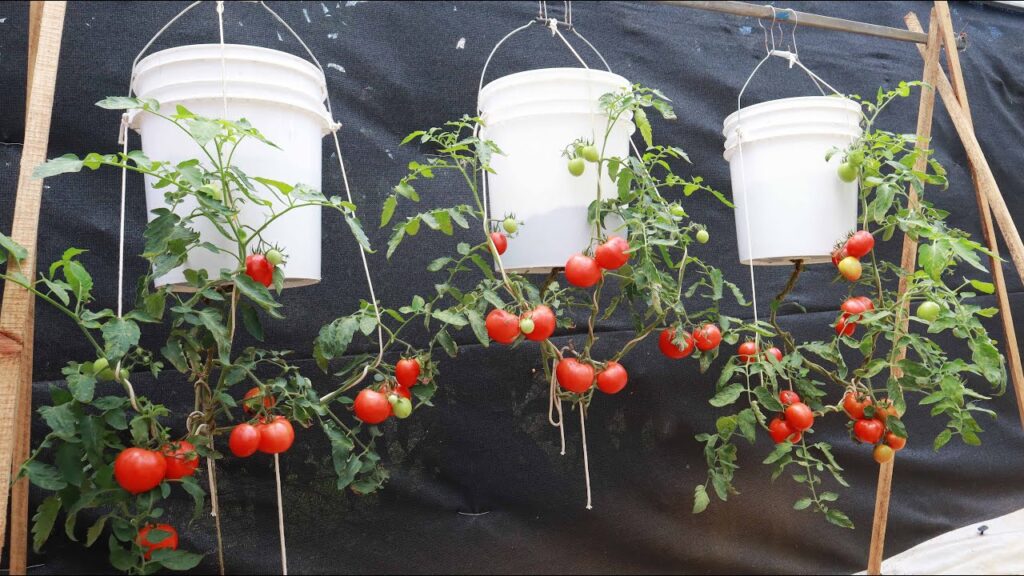
Instead of planting the tomato upright, hanging tomato systems benefit from planting the seedling sideways. This makes it naturally bend downward as it grows.
Steps:
- Fill the hanging container halfway with the soil mix.
- Gently bend the seedling sideways (not vertically).
- Cover the roots and base with soil.
- Leave the top 10–15 cm of the plant exposed.
- Water well.
Within a few days, gravity will pull the plant downward, and it will grow as a natural hanging vine.
💧 6. Watering: Balance Is Key
Hanging containers dry out faster due to airflow, so proper watering is crucial.
Watering Guidelines:
- Water once daily in summer
- Water every 2–3 days in winter
- Always water deeply
- Check the soil by touching; if dry 2 cm below the surface, water immediately
Avoid:
✘ Overflowing water
✘ Wetting the leaves excessively
✘ Letting soil dry out completely
Use a slow-watering method like a small drip bottle to maintain steady moisture.
🍃 7. Fertilizing Hanging Tomatoes
Tomatoes are heavy feeders. When grown in hanging baskets, their nutrients drain faster due to watering.
Best Fertilizers for Hanging Tomatoes:
- Vermicompost
- Mustard cake water (weekly)
- Seaweed extract
- Organic tomato fertilizer
- Banana peel fertilizer
- Compost tea
Feeding Schedule:
- First feed: 10 days after planting
- Then every 7–10 days
- During fruiting, increase potassium (banana peel water, wood ash, seaweed extract)
Nitrogen helps leafy growth, but potassium is essential for flowering and fruiting.

🌼 8. Flowering and Fruit Setting: Boosting Production
Hanging tomato plants often flower earlier due to better air circulation and sunlight exposure.
To Increase Flowering:
- Provide 6–8 hours sunlight
- Maintain even moisture
- Use seaweed extract once every 2 weeks
- Avoid over-fertilizing with nitrogen
- Gently shake the plant daily to assist pollination
Tomatoes self-pollinate, but shaking helps pollen transfer.
🪲 9. Common Problems and Easy Solutions
1. Yellow Leaves
- Cause: Overwatering or nutrient deficiency
- Solution: Reduce watering, add compost tea
2. Blossom Drop
- Cause: High temperature or low humidity
- Solution: Water regularly, increase shade during heatwaves
3. Pests (aphids, whiteflies, caterpillars)
- Spray neem oil (2 ml per liter)
- Use sticky traps
- Add basil or marigold near the container
4. Cracked Tomatoes
- Cause: Irregular watering
- Solution: Maintain consistent moisture
🪴 10. Pruning and Maintenance
While trailing tomatoes don’t need heavy pruning, some care is essential.
Pruning Steps:
- Remove yellow leaves
- Pinch off suckers for compact growth
- Cut branches touching the ground or walls
- Keep the interior airy
A well-pruned hanging tomato plant produces higher yields.
🍅 11. Harvesting: When and How to Pick
Depending on the variety, tomatoes ripen in 60–80 days.
Signs of Ripeness:
- Bright color (red, yellow, or orange)
- Slightly soft when pressed
- Detaches easily from stem
Harvest Tips:
- Pick fruits gently to avoid damaging vines
- Harvest regularly to encourage more fruiting
- Morning harvest keeps tomatoes fresh longer
🌿 12. Tips for Maximum Yield From Hanging Tomatoes
Here are some gardening hacks that significantly boost your harvest:
✔ Use deep, wide containers
Roots need space.
✔ Mulch the soil surface
Reduces water evaporation.
✔ Rotate the basket
Ensures sunlight reaches all sides.
✔ Add compost every month
Replenishes nutrients.
✔ Support heavy clusters
Tie strings or use soft ties if fruits become heavy.
✔ Plant companion herbs
- Basil improves flavor
- Mint keeps pests away
- Marigold deters whiteflies
🌟 Conclusion: The Future of Tomato Gardening Is Hanging
Hanging tomatoes offer a modern, space-saving, and productive way to grow juicy, delicious tomatoes right at home. Whether you have a small balcony, rooftop, veranda, or even a sunny kitchen window, this method can transform your gardening experience.
By choosing the right variety, using quality soil, providing regular nutrients, and ensuring proper sunlight, you can enjoy heavy clusters of sweet tomatoes hanging beautifully within arm’s reach.