Plants never cease to amaze us, and among the most extraordinary is the Stapelia gigantea, often called the “carrion flower.” Known for its gigantic 10-inch blooms, striking star-shaped flowers, and unusual characteristics, this succulent plant captures the attention of gardeners and plant enthusiasts alike. While it may seem bizarre at first glance, growing Stapelia gigantea can be a rewarding and fascinating experience. This guide provides a complete overview of this weird yet beautiful plant, including care tips, flowering secrets, and how to maintain it successfully at home.
1. Introduction to Stapelia Gigantea
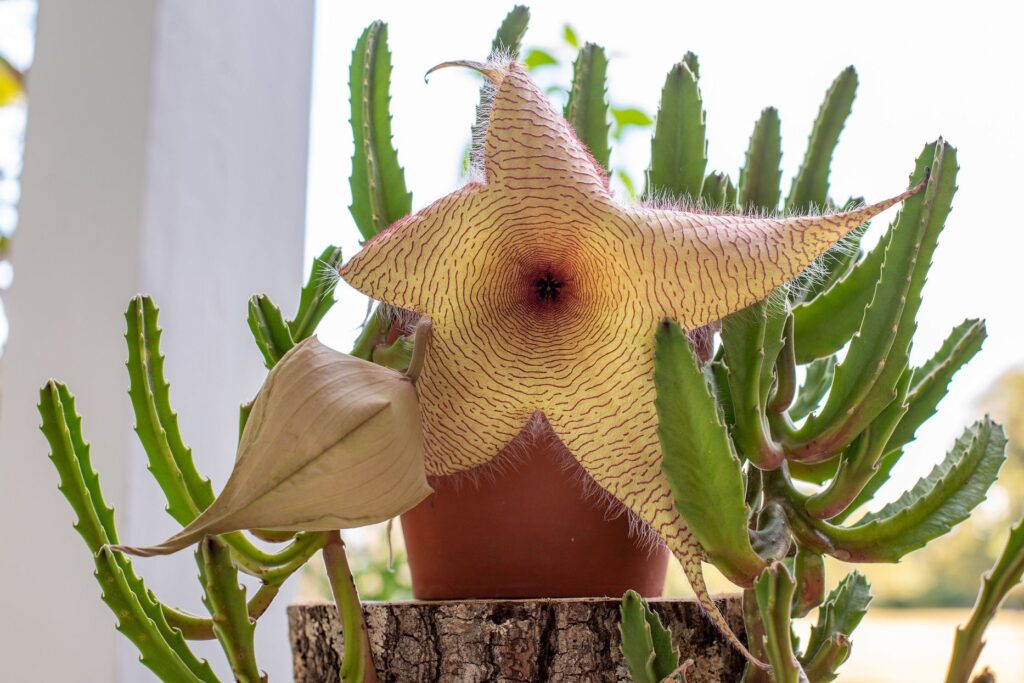
Stapelia gigantea belongs to the succulent family Apocynaceae and is native to South Africa. It is widely recognized for:
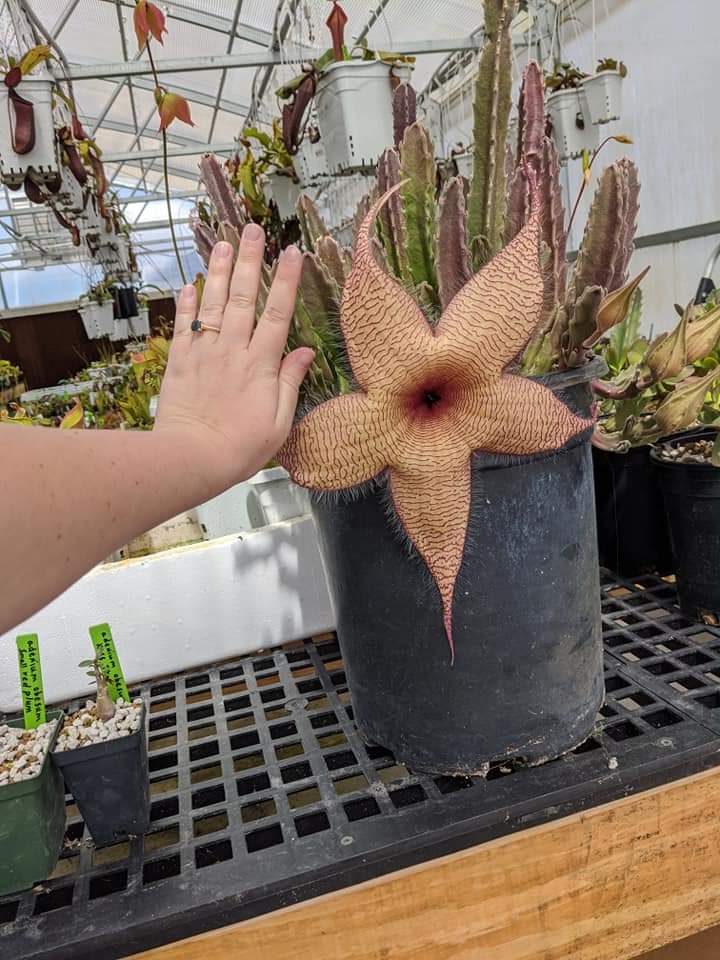
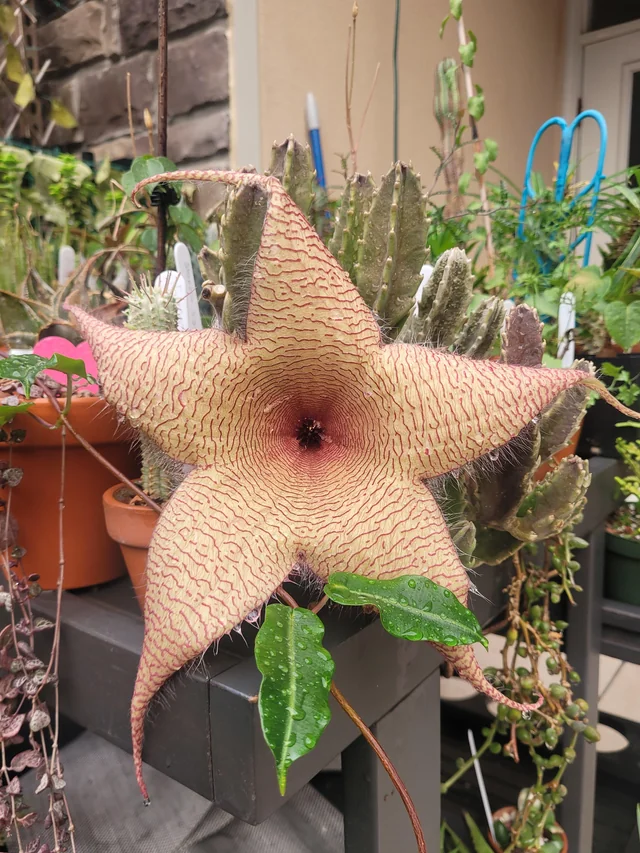
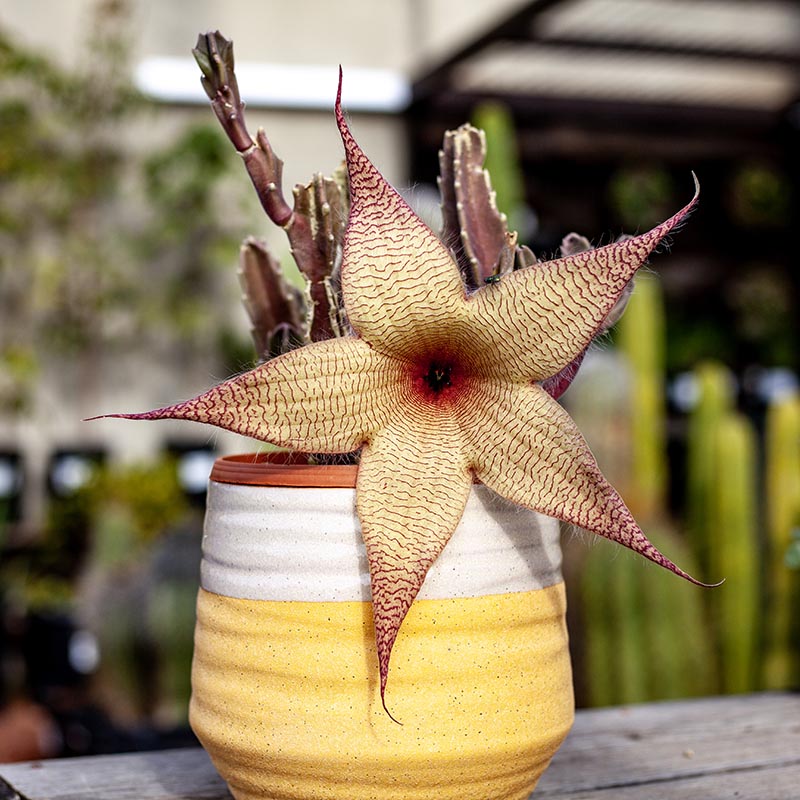
- Gigantic flowers: Blooms can reach up to 10 inches across.
- Star-shaped flowers: Often covered in unique textures and patterns.
- Carrion scent: Emits a smell resembling rotting flesh to attract pollinators, primarily flies.
- Trailing growth habit: Stems can grow several feet long, often sprawling over pots or trellises.
Despite its unusual odor, the plant’s exotic appearance and enormous blooms make it a conversation starter and a collector’s favorite.
2. Why Grow Stapelia Gigantea?
Stapelia gigantea may seem unusual, but there are several reasons gardeners adore it:
- Unusual aesthetic: The massive star-shaped flowers are unlike any other houseplant.
- Low maintenance: Being a succulent, it requires minimal care and is drought-tolerant.
- Conversation starter: Its strange yet fascinating flowers intrigue visitors and fellow gardeners.
- Educational: Teaches about unique pollination strategies in plants.
Growing this plant is a blend of curiosity, wonder, and horticultural challenge, perfect for succulent enthusiasts.

3. Choosing the Right Plant or Propagation Method
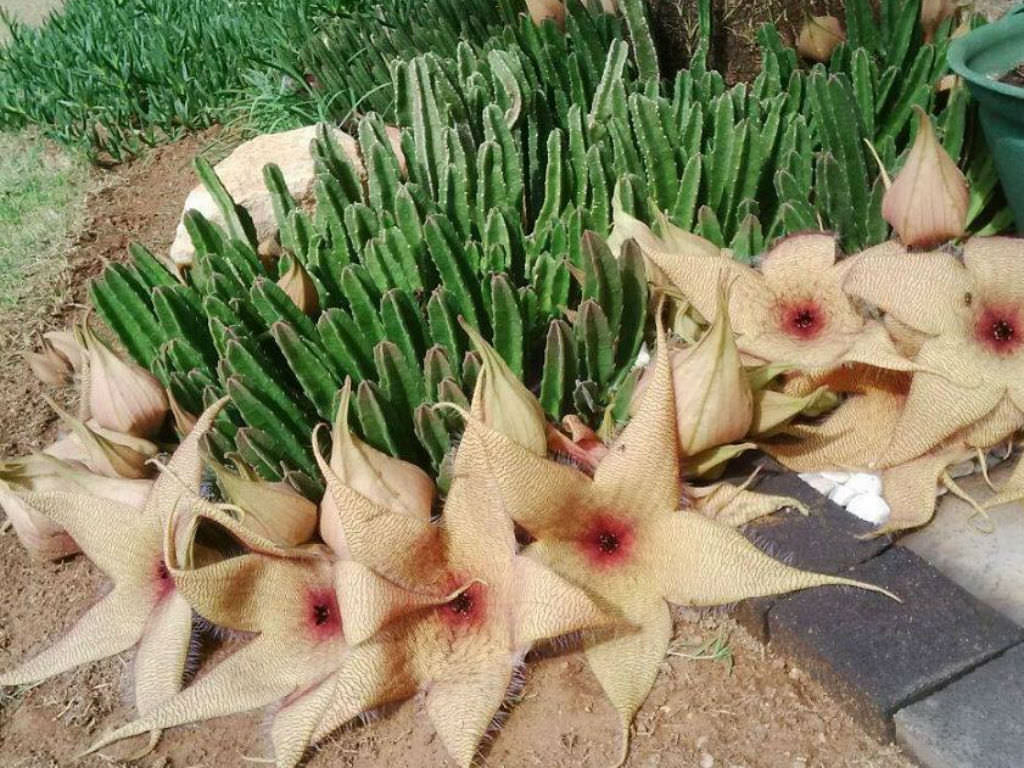
Stapelia gigantea can be grown from seeds, cuttings, or nursery plants:
- Nursery plants: Ideal for beginners; easier to flower than seeds.
- Stem cuttings: Mature stems can be cut and rooted in well-draining soil.
- Seeds: Requires patience, as flowering may take 2–3 years.
Stem cuttings are the most popular method due to their fast rooting and ability to produce large flowers sooner.
4. Potting and Soil Requirements
Stapelia gigantea thrives in well-draining soil:
- Soil type: Use cactus or succulent potting mix, combined with sand or perlite for drainage.
- Container: Wide, shallow pots are preferable to accommodate sprawling stems. Ensure drainage holes are present.
- Soil pH: Slightly acidic to neutral (6.0–7.0) is ideal.
Good drainage is crucial to prevent root rot, a common problem for succulents.
5. Light and Temperature Requirements
Proper light and temperature conditions are key to healthy growth:
- Light: Stapelia gigantea prefers bright, indirect sunlight. Too much direct sunlight can scorch stems.
- Temperature: Ideal growth occurs between 20–30°C (68–86°F). Protect from frost in colder regions.
- Indoor placement: Near a south-facing window with filtered light works best.
Providing optimal light encourages vigorous growth and enhances flower production.
6. Watering Care
As a succulent, Stapelia gigantea requires careful watering:
- Water sparingly: Allow the soil to dry between watering sessions.
- Reduce in winter: Water even less during the plant’s dormant period.
- Avoid water on stems: Excess water can lead to stem rot.
- Signs of under-watering: Wrinkled stems; overwatering can cause soft, mushy stems.
Maintaining proper watering ensures a healthy plant and prevents common issues like rot or mold.
7. Fertilization
Stapelia gigantea benefits from occasional feeding:
- Fertilizer type: Use a diluted, balanced succulent or cactus fertilizer.
- Frequency: Feed every 4–6 weeks during the growing season (spring and summer).
- Avoid over-fertilizing: Too much fertilizer can cause weak stems and reduce flower quality.
Fertilization encourages stronger stems and larger, more vibrant flowers.
8. Flowering Secrets
The main attraction of Stapelia gigantea is its massive flowers:
- Blooming season: Typically blooms in summer or late spring, depending on climate and care.
- Flower size: Can reach up to 10 inches, making it one of the largest flowers among succulents.
- Fragrance: The strong carrion scent attracts pollinators like flies. While unusual, this is a natural adaptation.
- Flower duration: Each flower lasts about 5–7 days, but multiple blooms can appear sequentially.
With proper care, your Stapelia gigantea can produce multiple awe-inspiring flowers each year.
9. Propagation Methods
Expanding your collection or sharing plants is easy with these propagation methods:
- Stem cuttings: Cut a mature stem, let it dry for a few days, and then plant in well-draining soil.
- Division: Mature plants with multiple stems can be divided carefully.
- Seeds: Sow in sandy soil, keep warm and moist. Germination may take several weeks.
Stem cuttings remain the fastest and most reliable method for beginners.
10. Pest and Disease Management
Despite being hardy, Stapelia gigantea may face some challenges:

- Pests: Mealybugs, aphids, and spider mites can occasionally infest stems. Treat with neem oil or insecticidal soap.
- Diseases: Root and stem rot caused by overwatering or poor drainage. Remove affected parts and repot in fresh soil.
- Preventive care: Ensure good airflow, avoid waterlogging, and check plants regularly.
Proper care keeps this fascinating plant healthy and thriving.
11. Tips for Growing Stapelia Gigantea Successfully
- Use well-draining soil: Prevents root and stem rot.
- Provide filtered sunlight: Encourages flowering without scorching stems.
- Water carefully: Less is more; avoid standing water.
- Fertilize moderately: Promotes strong growth and flowers.
- Patience is key: Flowers may take a year or more to appear on younger plants.
- Support stems: For sprawling varieties, use stakes or trellises to prevent breakage.
Following these tips ensures a flourishing, flower-producing plant that becomes the centerpiece of your collection.
12. Benefits of Growing Stapelia Gigantea
- Aesthetic appeal: Large, exotic flowers add uniqueness to gardens or indoor collections.
- Educational value: Learn about unusual pollination strategies and plant adaptations.
- Conversation starter: Its weird and fascinating flowers intrigue anyone who sees it.
- Low-maintenance: Ideal for succulent enthusiasts and busy gardeners.
- Propagation opportunities: Easily multiplied to share with fellow gardeners.
Stapelia gigantea is not just a plant—it’s a fascinating botanical experience.
Conclusion
Stapelia gigantea, the 10-inch giant carrion flower, is a perfect example of how nature blends weirdness with beauty. Its massive star-shaped blooms, unusual fragrance, and striking foliage make it a must-have for succulent enthusiasts and collectors. With proper soil, light, watering, and care, even beginners can grow this fascinating plant successfully at home.
By following this complete guide with updates, you can enjoy the thrill of witnessing one of the most extraordinary flowers in the succulent world, transforming your garden, balcony, or indoor space into a realm of weird yet wonderful beauty.